





Innovative application of polyaspartic acid ester polyurea on steel structure surface
As an important field of anticorrosion engineering, anticorrosion of steel structures has always relied on multi-layer coating systems to ensure its corrosion resistance and service life. However, with the increase in labor costs and the increasingly strict environmental protection requirements, the traditional multi-coat system has gradually shown its limitations. In this context, polyaspartic acid ester polyurea, as a new environmentally friendly and high-efficiency anticorrosion material, is gradually emerging in the field of anticorrosion of steel structures.
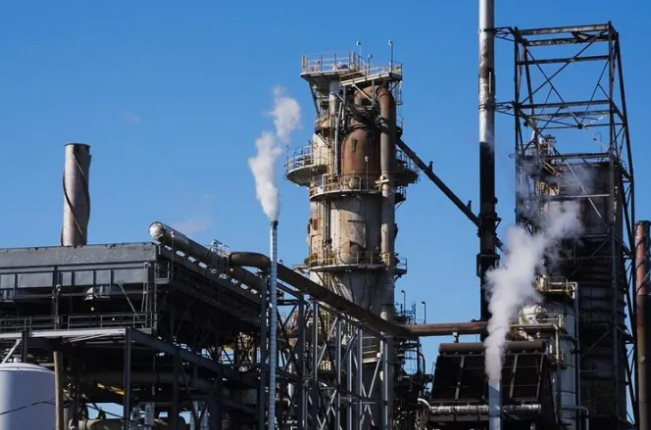
Advantages of Polyaspartic Acid Ester Polyurea
Environmental protection
Polyaspartic Acid Ester Polyurea, with its extremely low VOC (volatile organic compound) content or even no VOC at all, fully complies with the requirements of GB 37822-2019 "Control Standard for Fugitive Emission of Volatile Organic Compounds". During the coating construction process, there is no need to take waste gas collection measures, greatly reducing environmental pollution.
High performance
The single coating thickness of polyaspartic acid ester polyurea can reach 600 μm. The coating surface has no pores. It is friction resistant, UV-resistant, has good flexibility, does not turn yellow, and can withstand acids and alkalis below 5% and various chemical media. In addition, it can cure quickly in sub-zero temperature environments, effectively saving construction time and labor costs.
Wide applicability
According to the standard of HG/T 5368-2018 "Polytaspartic Acid Ester Anticorrosive Coatings", ST-PA410 Polyaspartic Acid Ester Polyurea can be independently applied to ordinary anticorrosive environments of C4 and below, and can also be used in combination with epoxy primer in C5 corrosive environments. This characteristic makes it widely used in various steel structure anticorrosion projects.
Specific application in anti-corrosion of steel structures
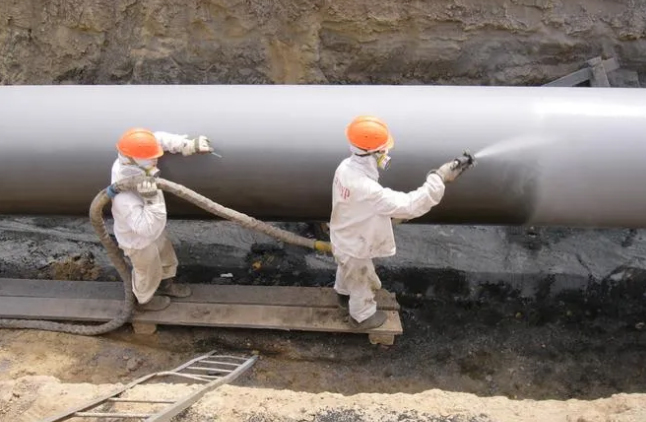
Innovation in Coating System
When the primer is zinc-rich primer, the bonding force between the Polyaspartic Acid Ester Polyurea topcoat and the primer exceeds 5Mpa, and the salt spray resistance time is as high as more than 3000 hours. Compared with the traditional multi-coat system, this coating system not only greatly saves labor and time costs, but also meets the thickness and environmental protection requirements specified by the design. It can be called an innovation in coating technology.
Surface treatment of steel structures
To ensure good adhesion between the Polyaspartic Acid Ester Polyurea and steel structure, the surface of steel structure needs to undergo strict sandblasting treatment to obtain appropriate roughness and cleanliness. At the same time, soluble salts on the surface of the steel structure must be removed to prevent damage to the coating. Wet sandblasting (especially supersonic wet sandblasting) has become a preferred method for surface treatment of steel structures due to its efficient salt removal ability.
Construction convenience
Polyaspartic Acid Ester Polyurea is not only suitable for spraying construction, but can also be constructed by various methods such as roller coating and brush coating, greatly improving construction convenience. Especially in the application of quick-drying aspartate polyurea, using a special high-solid-content two-component spraying machine for construction can cure normally even at -10℃, greatly shortening the construction period.
Application prospects
With the continuous increase in the use of steel structures in China, the scale of the anticorrosion coating market is expanding day by day. Polyaspartic Acid Ester Polyurea shows great application potential in the field of steel structure anticorrosion with its excellent performance and environmental protection characteristics. From ordinary steel structure anticorrosion to large-scale steel structure anticorrosion projects such as wind power, photovoltaic, and offshore platforms, Polyaspartic Acid Ester Polyurea is gradually becoming the new favorite in the anticorrosion coating market.

Conclusion
The innovative application of ST-PA410 polyaspartic acid ester polyurea on the surface of steel structures not only solves the problems of traditional multi-coat systems in environmental protection and construction efficiency, but also brings new development opportunities for the field of steel structure anticorrosion. With the continuous progress of technology and the continuous growth of market demand, the application prospects of polyaspartic acid ester polyurea will be even broader.