







Innovative application of sprayed polyurea ST-P211 on the inner wall of stainless steel
With the continuous progress of industrial technology, material anticorrosion has become a key link in ensuring equipment safety and prolonging service life. In the field of anticorrosion of stainless steel storage tanks, sprayed polyurea stands out with its excellent performance and has become the current mainstream choice. This article will deeply explore the application of ST-P211 sprayed polyurea on the inner wall of stainless steel and its significant advantages.
Sprayed polyurea: A rising star in the field of anticorrosion.
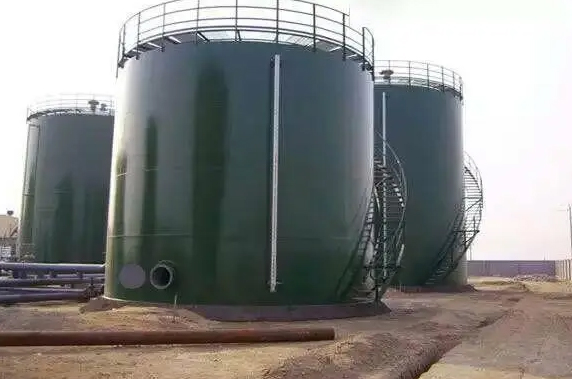
Sprayed polyurea products, with their physical and chemical properties such as high solid content, high elasticity, wear resistance, impermeability, corrosion resistance and salt resistance, show strong potential in the fields of waterproofing for civil buildings and industrial anticorrosion. Especially in the anticorrosion of the inner wall of industrial stainless steel storage tanks, the application of sprayed polyurea has achieved remarkable results and become a benchmark in the industry.
Challenges and demands of stainless steel storage tanks
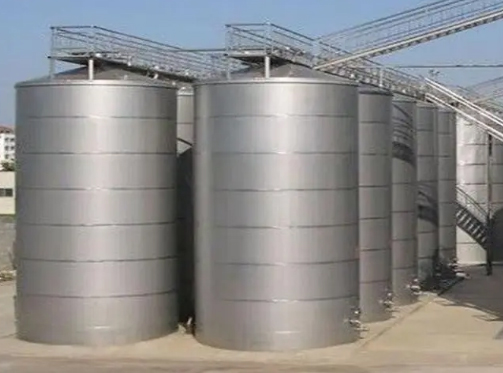
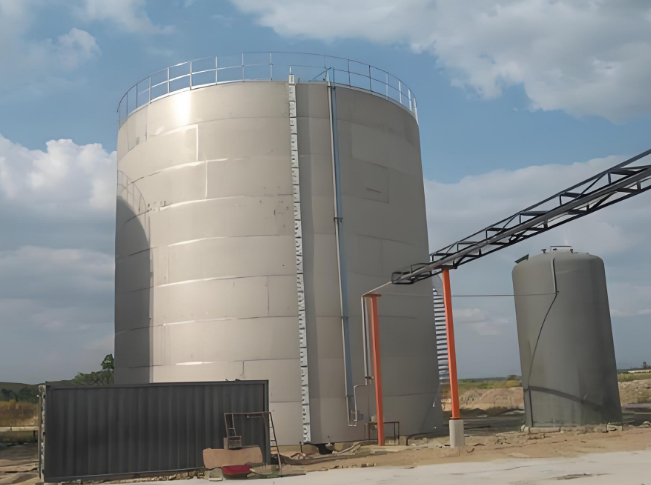
Stainless steel materials are widely used in fields such as fire water tanks, demineralized water tanks, marine equipment, and chemical agent storage tanks due to their excellent rigid strength and corrosion resistance effects. However, the salt resistance of stainless steel has become a major shortcoming. The presence of salt will cause "intergranular corrosion" to stainless steel, resulting in a decrease in material strength, failure of corrosion resistance performance, and even serious problems such as weld cracking, directly affecting the service life and safety of equipment or storage tanks.
Spray polyurea: Solving this problem
To address the salt corrosion resistance issue of stainless steel storage tanks Anticorrosion,traditional methods such as resin coating, resin flake batch coating and lining have certain effects, but there are problems such as being unenvironmentally friendly, unsafe, and prone to delamination. Especially when working in a confined space, oily coatings are prone to cause fire and explosion accidents, while Water-Based Coatings are difficult to meet anticorrosion requirements and have poor adhesion.
In this context, sprayed polyurea stands out with its unique advantages. Since its successful application in the field of industrial anticorrosion, a large number of cases have proved that sprayed polyurea performs excellently in the anticorrosion of the inner wall of stainless steel storage tanks and has become the mainstream material for salt corrosion resistance. With the development of marine engineering and seawater desalination systems, the application of sprayed polyurea in stainless steel seawater corrosion resistance is also becoming more and more extensive.
Key points of construction technology
To ensure the anticorrosion effect of sprayed polyurea on the inner wall of stainless steel storage tanks, the following two aspects need special attention in the construction technology:
1.Stainless steel surface treatment: Since the stainless steel surface is dense and smooth, sandblasting treatment is required to increase the specific surface area, clean the surface oil stain and increase the adhesion with the primer. The roughness of water blasting is recommended to be controlled at about 40 μm, and no flash rust inhibitor should be added to avoid secondary repair of stainless steel due to contact with water.
2.Primer selection and matching: The selection of primer is crucial. It must be similar and compatible with sprayed polyurea and have good adhesion to stainless steel materials. It is recommended to use a special primer for polyurea. This primer not only has excellent cathodic disbondment resistance (data reaches [1.5v (65℃±5℃), 48h] ≤15mm, GB/T 3831-2006), but also has extremely strong adhesion (adhesion on metal surface reaches 11.5MPa, ASTM D-3359). In addition, garnet should be selected as the abrasive for water blasting to avoid side effects of other abrasives on stainless steel materials.
Thickness and Material Selection of Anti corrosion Coating
The total dry film thickness of the anti-corrosion layer on the inner wall of stainless steel storage tanks is generally controlled at around 2100 μ m, including about 50 μ m for primer and about 2050 μ m for spray polyurea. The inner wall polyurea coating often uses 100% solid content aromatic polyurea elastomer, which can withstand various corrosive media such as 10% sulfuric acid, 10% hydrochloric acid, 10% sodium hydroxide, and 30g/L salt solution, and can maintain stability for 2000 hours in salt spray environment. For the outer walls and accessories of outdoor storage tanks, it is recommended to use aliphatic polyurea elastomers and apply polyurea topcoat to prevent color yellowing.
Conclusion
The application of ST-P211 sprayed polyurea in the anticorrosion of the inner wall of stainless steel storage tanks not only solves many drawbacks of traditional anticorrosion materials, but also greatly improves the corrosion resistance and service life of storage tanks. With the continuous progress of technology and the continuous expansion of application fields, sprayed polyurea will surely show its unique charm and broad prospects in more fields.